
February 11thReflection on the Intersection of Faith and Science
I’ve spent the past two summers doing wildlife surveys and vegetation management in Waterton Lakes National Park. Going into my first summer, I had no knowledge or real interest in invasive plants or any plants for that matter. I accepted the job because it felt like the perfect excuse to spend a couple of summers in the mountains where I could pursue my real passion – looking for birds.
But being in the region of Canada with the highest plant diversity, and spending every day surrounded by people who were genuinely excited about plants, it didn’t take long before I started noticing the plants as well. At first, it was just learning to recognize the most distinctive wildflowers, but soon I was hooked, and found myself spending hours keying out individual blades of grass, trying to figure out what species they belonged to. By my second summer, I was planning botanizing trips on the weekends, in search of plants I hadn’t yet come across.
As the summer went on, it became harder to find new plants, and by August I was starting to lose motivation for looking at plants when one morning, a coworker showed up to work with this photo.
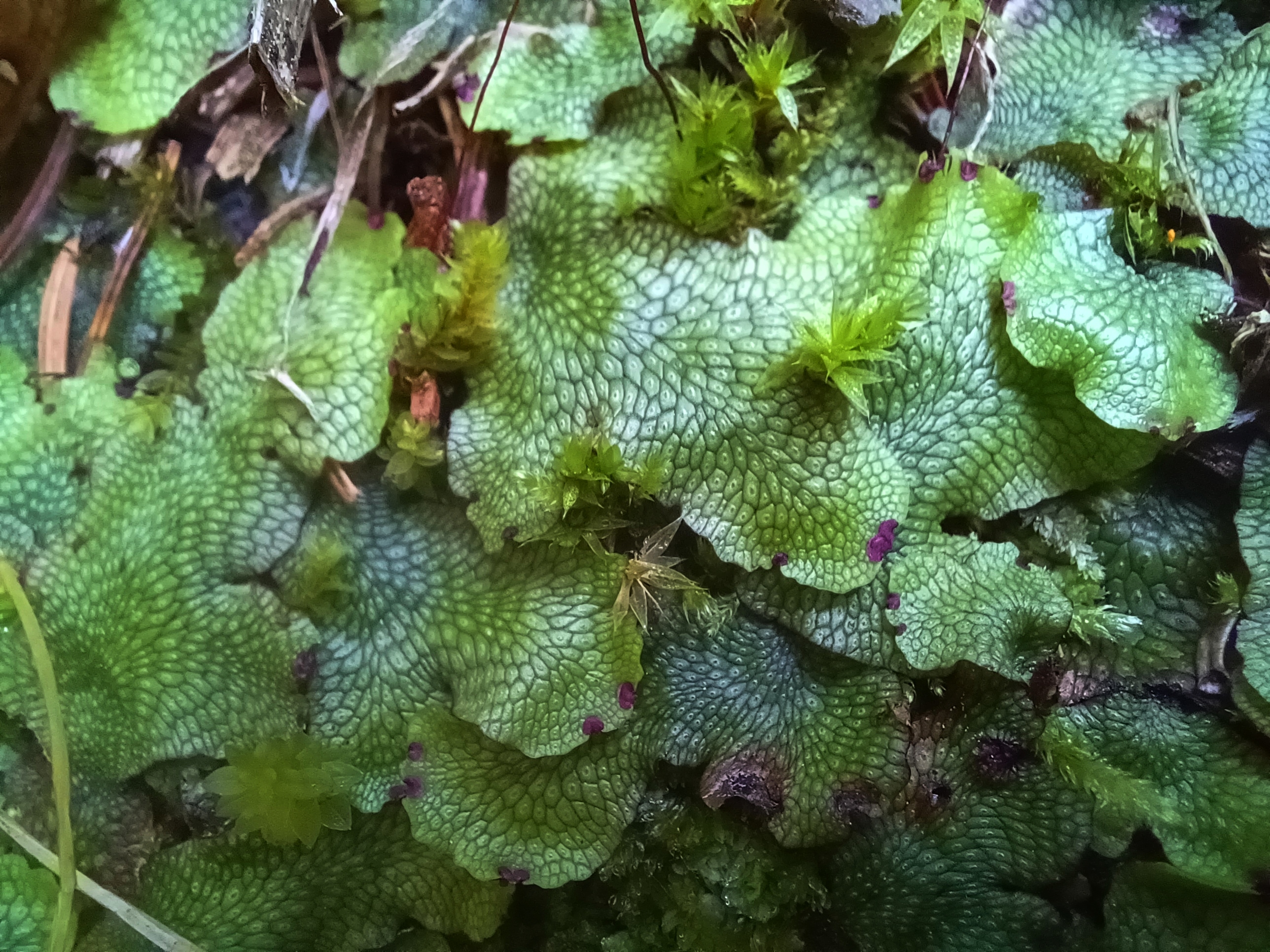
The plant is called Snakewort – it is a species of liverwort. Liverworts make up their own phylum of plants, and before that moment I didn’t even know they existed. They’re small, flat plants that grow on rocks along streams. Exactly the kind of thing you’d walk right past without noticing, unless you were really paying close attention.
The following week, on a camping trip, that same coworker and I set out to look for liverworts – and we ended up finding dozens of them, from several species. They had been there all along; we just hadn’t been paying close enough attention to notice them.
For me, the interplay between science and faith is subtle, but deep. It turns my curiosity about the world into a spiritual practice, with the art of noticing becoming a form of reverence.
The kind of noticing I’m referring to isn’t just scientific – it’s spiritual. Paying attention as a way of honouring creation. The world becomes more beautiful when I pay close attention. The closer I look, the more wonder I see. Water droplets clinging to a spider web after a morning dew. Ravens frolicking and tumbling in the wind for no apparent reason other than joy. The intricate geometric arrangements of moss. All these small, beautiful things I would otherwise overlook.
For me, curiosity becomes a kind of prayer – wondering, asking, leaning closer. It is also a way of resisting apathy. Curiosity teaches me to care about creation and not let any details slip through the cracks.
CMU has taught me to embrace both science and faith. Science has given me the discipline of curiosity. Faith has given me the desire to use it well. Together, they invite me to stay awake to the world – to notice the gifts hidden in plain sight.